
Branded Links: How to Create Custom Short URLs People Trust
What branded links are, how to set up a short-link domain with DNS and HTTPS, and how to name your slugs and measure every click.

A short link like go.yourbrand.co/spring tells people two things before they tap: who sent it and roughly where it leads. A link on a generic shortener domain tells them neither. That small difference is why so many teams move their short links to a domain they own.
This guide covers what branded links are, why they're worth setting up and how to do it in practice: choosing a subdomain, adding the DNS record, confirming HTTPS, naming your slugs and measuring every click.
What is a branded link?
A branded link is a short URL on a domain you control, usually your brand name or a short version of it. Instead of a random string on a shared shortener domain, the link carries your name: go.yourbrand.co/menu, link.yourbrand.co/webinar or qr.yourbrand.co/store-2.
Behind the scenes, it works like any other short link. Someone opens it, and the link platform redirects them to the destination you chose. What changes is what people see before they click. And because the link points to your platform rather than straight to the page, you can change the destination later without changing the link.
Why branded links are worth it
- People recognize the sender. Your name in the address shows who the link belongs to, whether it appears in a text message, an email or a social post.
- They look less suspicious. Anyone can create a link on a shared shortener domain, so readers can't tell who is behind it. A domain you own carries only your links.
- They're easy to remember and type. A short, readable address works on print and packaging, and when someone reads it aloud in a podcast or video.
- They keep your brand consistent. The same domain appears on every link and inside every QR code you create on it.
- Every click lands in one place. Links and QR codes on your domain share the same analytics, so you can compare channels side by side.
Step 1: Choose the domain
You have two options:
- A subdomain of a domain you already own, such as go., link., qr., l. or s. in front of your website's domain. It costs nothing extra and carries your name. A new subdomain has no DNS records yet, so adding one can't break your website. For most teams, this is the answer.
- A separate short domain bought only for links. It makes sense when every character counts, such as a code printed at a small size or an address read aloud. It adds a registration to renew, and it starts with no reputation of its own.
Whichever you choose, keep it boring and readable: no hyphens, no digits that sound like letters and nothing that has to be spelled out twice. If you buy a used domain, check its history first, because a domain that once hosted spam can be flagged by security filters.
Don't point your website's root domain at a link platform. If yourbrand.co starts serving short links, your website stops loading at that address, and the root domain often carries your email too.
Worried about SEO? A subdomain for links doesn't cost your website search visibility, and short links aren't meant to rank anyway: in CodeQR, links on a custom domain are served with a noindex instruction by default. For a deeper walkthrough, read Choose the right domain for your short links.
Step 2: Add the DNS record
Your link platform tells you exactly which record to add. In general:
- A subdomain such as go.yourbrand.co uses a CNAME record that points to the address your platform gives you.
- A root domain used only for links uses an A record with the IP address your platform gives you.
Add the record wherever your DNS is managed. That's often your domain registrar, but it can also be Cloudflare or your hosting provider. A few things trip people up:
- A hostname can't hold a CNAME record alongside other records with the same name, so pick a subdomain that isn't already in use.
- With CodeQR, a record on Cloudflare has to stay DNS only (unproxied). A proxied record is the most common reason a domain never verifies.
- DNS changes can take a while to propagate. Wait and check again before you change anything.
In CodeQR, custom domains are available on Starter and above. Open Domains, select Add Domain, enter the domain and add the record CodeQR shows you. Then select Refresh: once DNS has propagated, the domain starts serving links. The full steps are in Connect your own domain to CodeQR.
Step 3: Confirm HTTPS
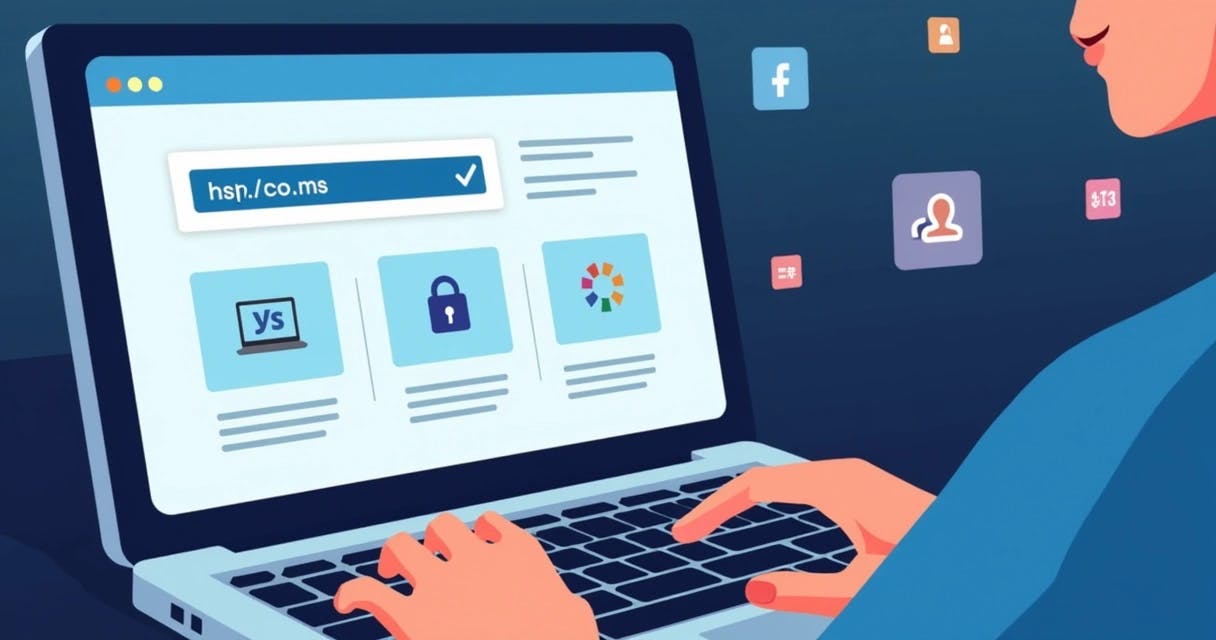
Browsers mark pages that aren't served over HTTPS as not secure, and a warning is the fastest way to lose trust in a branded link. Don't share links on a new domain until its certificate is in place.
With CodeQR, once your DNS record is verified, the domain is served over HTTPS. If your domain has CAA records, make sure they don't block certificates for the link subdomain, or setup can stall. To check the result, open a test link in a private browser window: it should load securely and land on the right destination.
Step 4: Set a slug naming convention
The slug is the part after the slash. A convention keeps links readable and stops your team from creating five versions of the same link.
- Use words, not random strings. /spring-sale says more than /x7Fq2 and is easier to read aloud.
- Keep slugs short and lowercase, with hyphens between words.
- Reserve evergreen slugs for destinations that never go away, such as /menu, /book or /support.
- Keep the channel out of the slug when you can. Use one clean slug per campaign and add UTM tags for the source and medium with the UTM Builder. If you do need a separate link per channel, pick one pattern, such as /spring-ig and /spring-print, and stick to it.
- Avoid words that look like phishing, such as /login, /verify or /account, unless the link really leads there.
- Don't recycle slugs. A slug printed on last year's flyer will still get scanned. Point retired links to a relevant page instead of reusing or deleting them.
- Organize as you go. Tag links by campaign or channel on any plan; on Pro and above, you can also group them into folders.
Step 5: Measure every click
A branded link is only as useful as what you learn from it. In CodeQR, clicks and QR code scans on your domain land in the same Analytics as the rest of your workspace:
- Clicks and scans over time, by country, region and city.
- Device breakdowns (desktop, mobile and tablet) and referrers, starting on Starter.
- UTM reports in Analytics, starting on Pro. You can add UTM tags to your links on any plan.
- Conversion tracking for leads and sales, starting on Pro.
- Exports for the date range your plan keeps.
Clicks and scans appear in Analytics shortly after they happen. Review them on a regular schedule, compare channels and retire the links that no longer earn their place.

Where to use branded links
- Social profiles and posts. Bio fields have little room, and a short link with your name reads better than a generic one.
- Email and text messages. People are wary of unfamiliar links in messages. Your domain tells them who sent it.
- Print and QR codes. Create dynamic QR codes on your domain. Phone cameras usually show a link's domain before opening it, so your name appears right when someone decides whether to tap.
- Audio and video. A short domain and a one-word slug are easy to say and to remember.
- Packaging and product labels. Connect physical products to manuals, reorder pages or support, and change the destination without reprinting.
Advanced options
- Deep links to apps. Send iOS and Android visitors straight to the app store or an in-app link (Starter and above).
- Password protection and expiration dates for internal or time-limited links (Starter and above).
- Automation. Create links in bulk with the API, or from other tools with Zapier, Make, n8n or IFTTT.
- Leads in your CRM. Send new leads to your CRM (Starter and above).
- Audit log. Keep a record of who created, changed or deleted links. In CodeQR, the audit log is available on Business and above.
Common mistakes to avoid
- Pointing your website's root domain at the link platform.
- Leaving a Cloudflare record proxied, so the domain never verifies.
- Replacing the domain after links are printed. Every URL already in circulation depends on it, so keep the old domain connected and set the new one as your primary domain.
- Deleting old links that are still printed somewhere.
- Letting every teammate invent their own slug style.
Conclusion
Branded links are a small change with a long tail: the domain you pick today will appear on every link you share and every QR code you print. Choose a subdomain you control, add the DNS record, confirm HTTPS, agree on a slug convention and review your analytics on a schedule.
Custom domains in CodeQR start on Starter. Compare plans on the pricing page, or see everything the Link Shortener can do.
Branded links: frequently asked questions
A branded link is a short URL on a domain you control, such as go.yourbrand.co/offer. It replaces a generic shortener address with your brand name, so people can recognize who the link belongs to. It redirects like any other short link, and you can change the destination later.