
How to Recover and Convert Visitors in Digital Marketing
Learn how to create retargeting campaigns using pixels, segmentation, and ads to recover visitors and increase digital conversion.

Over the years of observing digital strategies, I have realized that few actions are as powerful as re-engaging people who have already shown interest but left without converting. This is the world of retargeting—an essential tool for anyone who wants to turn scattered prospects into real opportunities. I will share what I have learned about it, how I apply it in my projects, and the main precautions to properly represent your business or brand.
What is retargeting and how does it differ from remarketing?
Many people confuse retargeting with remarketing, but in practice I have seen that understanding the difference changes everything in planning. Retargeting is a strategy aimed at re-impacting people who visited your website or interacted with digital content but did not complete an expected action, such as a purchase or registration. The main goal is to “remind” this visitor and bring them back into your funnel.
Remarketing, in the strict sense, usually involves direct communication, such as emails sent to leads who abandoned carts or downloaded content. In other words, while the former generally relies on paid media and personalized ads, the latter focuses on campaigns via email or other one-to-one channels.
Even though the lines may overlap, adopting both amplifies results. I often think of retargeting as a smart billboard that follows you precisely when you are about to forget a special offer.
“Only those who truly want you back will remind you.”
How pixel tracking and audience segmentation work
One of the most technical—but equally interesting—topics is how we identify these non-converting visitors. This happens through the so-called tracking pixel or script.
What is a tracking pixel?
A pixel is a small piece of code inserted into website pages, forms, or even shortened links provided by platforms such as CodeQR. It allows you to monitor visitor actions, such as which products they viewed, how far they progressed, and whether they completed an action (purchase, registration, etc.).
Segmentation: the magic of custom audiences
With the collected data, I create dynamic audience lists. For example:
- People who visited a specific product category but did not purchase
- Visitors who reached a campaign landing page
- Users who added items to the cart but abandoned before checkout
- Those who clicked QR Code links (an interesting integration of what CodeQR offers for tracking physical and digital actions)
- Users who interacted only with specific blog posts
The potential here is enormous. Each behavior reveals different intentions and needs. Personalizing ads for each segment is precisely what makes retargeting so effective.
Most common types of retargeting and their applications
In my digital strategies, I alternate between several formats, because each business and objective requires a different approach. The main types include:
Website retargeting
The most traditional approach: re-impact visitors who accessed your site but did not convert. Ads reappear on other websites, apps, or partner portals within the ad network.
Search retargeting
This approach is based on search behavior. Users who searched for topics related to your product—even without visiting your site yet—can start seeing your ads based on those searches. It works well for audiences that already show clear purchase intent.
Social retargeting
This consists of displaying personalized ads on social networks such as Facebook, Instagram, and LinkedIn to people who interacted with your content or visited specific pages. Here, you can target everything from viewed products to downloaded content, watched videos, post interactions, and more.

Practical applications: e-commerce, leads, and cart recovery
These formats come to life mainly in three areas I am often asked about:
E-commerce
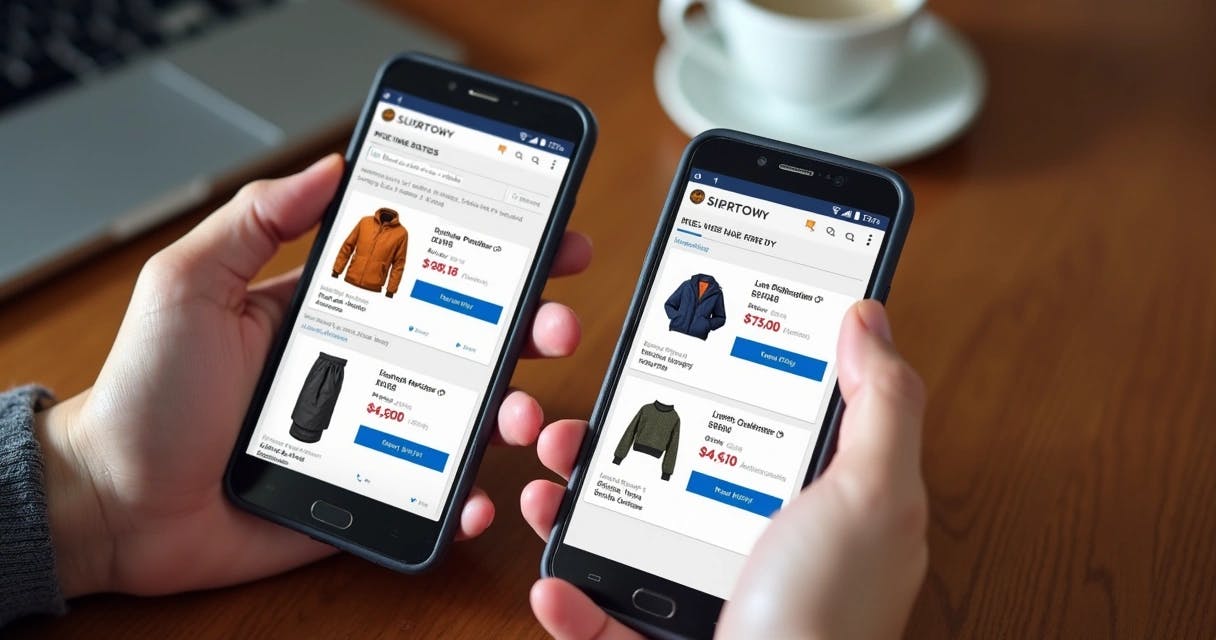
In digital retail, retargeting is synonymous with increased sales. I can re-impact users who viewed products but did not purchase with images, descriptions, and even dynamic discounts. It is also effective to create ads for previous buyers, promoting new collections or compatible accessories.
I have seen stores triple conversions simply by adjusting segmentation and exposure frequency. The secret lies in balancing reminders without becoming intrusive.
Lead generation
Campaigns focused on capturing contacts also gain new momentum. A lead who visited your landing page but hesitated can be persuaded later. Reintroducing the offer, showcasing testimonials, offering extra bonuses, or using social proof has a strong impact.
Cart recovery
Cart abandonment is a common challenge. Retargeting plays a key role here: while email marketing attempts recovery with personalized messages, ads recreate desire by visually displaying the abandoned product, increasing the likelihood of checkout completion. Tools like CodeQR also help track click sources, making it easier to understand where drop-offs originated.
How to implement campaigns on popular platforms
Whenever I talk about retargeting, the first question is where to start. Each channel has its own specifics, but the core steps are similar:
- Install the tracking pixel: Insert the pixel code on strategic pages of your site, blog, store, or even in short links and QR Codes generated by platforms like CodeQR.
- Configure custom audiences: Define rules to create lists of visitors, leads, buyers, cart abandoners, blog readers, etc.
- Develop personalized ads: Create visuals and copy tailored to each audience, adjusting tone and call to action.
- Set frequency and duration: Determine how long users will see ads and how often they will be impacted.
- Analyze and optimize: Monitor metrics, adjust budgets, creatives, and audience rules to improve performance over time.
Google Ads, Facebook Ads, and LinkedIn all offer retargeting systems, but the underlying principle is the same. I usually centralize tracking and audience management to maintain better organization and historical insight, especially when running multiple campaigns simultaneously.
“Personalization means treating each customer by name, even when they are just browsing.”
Practical examples of behavior-based segmentation
The greatest strength of retargeting is creative segmentation. Examples I frequently use include:
- Different ads for users who visited the pricing page but did not subscribe
- Exclusive campaigns for users who registered but did not activate the service
- Upsell offers for existing customers
- Active recovery for users who watched an explainer video until the end but did not click the CTA
- Distinct messaging for returning visitors versus new visitors
The more precisely I align segmentation rules with meaningful behaviors, the greater the chance of delivering the right ad to the right person at the ideal moment. That is what creates campaigns that truly convert.
Privacy and frequency considerations
After years of tracking regulatory changes and industry practices, I can say this clearly: retargeting only makes sense when it respects the customer. I follow best practices such as:
- Displaying a clear and detailed privacy policy regarding tracking
- Allowing users to opt out or be removed from lists
- Limiting ad frequency to avoid brand fatigue (“stalking effect”)
- Clearly segmenting audiences to avoid impacting users who already converted or showed disinterest
- Frequently reviewing rules in response to behavioral changes or new regulations
With solutions like CodeQR, it has become easier to combine tracking with privacy, since clients can define data limits, link expiration, and channel-specific policies.
Practical strategies to increase conversion with retargeting
My favorite tactics focus on aligning messaging with each funnel stage:
Top of the funnel
Visitors who just discovered your site and are still learning. Use educational ads, short videos, free content offers, or social proof.
Middle of the funnel
Here, users are comparing options. I like to show testimonials, comparative analyses, limited-time offers, and invitations to exclusive events.
Bottom of the funnel
This stage is conversion-focused. Personalized discounts, free shipping, extended guarantees, and “last chance” messages work well. Address the final objection that prevents action.
Across all stages, I rotate formats: static banners, carousels, short videos, personalized landing pages, and even QR Codes with CodeQR tracking to connect in-person and digital actions at events or points of sale.
“Smart persistence is the fuel of digital conversion.”
How to measure results and adjust campaigns throughout the funnel
Not all retargeting actions perform equally. I typically track key indicators such as:
- Click-through rate (CTR): Measures ad appeal to previously interested users
- Conversion rate: Shows who returned and completed the desired action
- Cost per acquisition (CPA): The cost of each recovered customer
- Average time to conversion: Helps understand post-exposure decision cycles
- Average frequency: How many times users saw the ad before converting (or disengaging)
I rely on centralized analytics tools or integration data (such as Zapier, Make, IFTTT, or REST APIs enabled by CodeQR) to cross-analyze results, identify bottlenecks, and define weekly optimizations.
Tips I always apply when optimizing retargeting campaigns
- Go beyond standard A/B tests by testing creatives, messaging, timing, and tone
- Split audiences to test variations (e.g., cart abandoners vs. product viewers)
- Use automation to allocate budgets and control frequency by funnel stage
- Shorten cycles, showing stronger offers only to users already impacted multiple times
- Integrate tracked links, landing pages, and QR Codes into a centralized solution for a 360-degree view
This continuous optimization process keeps campaigns relevant and aligned with each audience profile.

Retargeting in an omnichannel context
Today, customer journeys are fragmented. A user may discover your product via a QR Code in a physical store, research on a smartphone, compare on a laptop, and finally purchase through an app. Omnichannel thinking connects all these touchpoints.
That is why I see strong value in solutions like CodeQR, which track both offline (events, promotional materials, storefronts) and online interactions. By unifying channel data, I can build more personalized retargeting campaigns with centralized analytics.
For further exploration, I recommend following digital marketing blog content or diving deeper into the automation category to integrate processes.
Key challenges and how to avoid mistakes in retargeting
Retargeting is not without pitfalls. Over the years, I have seen mistakes harm brand reputation and waste budgets. To avoid them, I always focus on:
- Avoiding excessive exposure to the same audience in a short time
- Not showing products already purchased (especially in e-commerce)
- Personalizing copy and visuals instead of using generic templates
- Updating audience lists weekly, removing converters and disinterested users
- Staying fully compliant with regulations, including GDPR, CCPA, LGPD and platform policies
Integrating funnel analysis with refined segmentation is essential, and can be further explored in analytics-focused resources.
The role of content and automation in retargeting
Retargeting thrives on personalized content and automated processes. The more relevant the content, the higher the chance of re-capturing attention. Automation enables scale, data integration, and fast behavioral insights.
Link management tools, smart QR Codes, dynamic landing pages, and integrated automations simplify operations and ensure accurate tracking. When content, automation, and advanced segmentation come together, conversion rates rise consistently.
For real-world examples and tested applications, I recommend reading campaign case studies. If your business operates in online sales, the e-commerce section can further expand your perspective.
Retargeting at events and bridging physical and digital worlds
A growing trend is using retargeting to connect in-person and online experiences. Events, workshops, trade shows, points of sale, and local promotions can use trackable QR Codes to identify interest and later impact users with targeted ads or content.
In event scenarios, I have implemented integrations between lead capture via CodeQR and automated campaigns that delivered post-event conversion rates up to four times higher than traditional approaches. The key is precisely tracking the source of interest and aligning messaging with the interaction context.
“Where there is a click, there is a new chance.”
Conclusion: turn visitors into customers with smart retargeting
Over the years, I have learned that retargeting, when done correctly, becomes more than a tactic—it is a vital bridge between intent and results. Re-engaging interested users while respecting privacy, applying smart segmentation, and personalizing every interaction is what differentiates innovative digital businesses.
If your goal is to convert more and lose fewer opportunities, I recommend trying CodeQR’s integrated solutions for tracking, smart links, QR Codes, and detailed analytics. Test, adjust, and refine your campaigns. Your visitor may be just a few clicks away from becoming your next best customer.
Frequently asked questions about retargeting
Retargeting is a digital marketing strategy used to re-impact people who have already visited your site or interacted with your content but did not complete the desired action. Personalized ads increase the likelihood of conversion by reminding users of the product or offer.